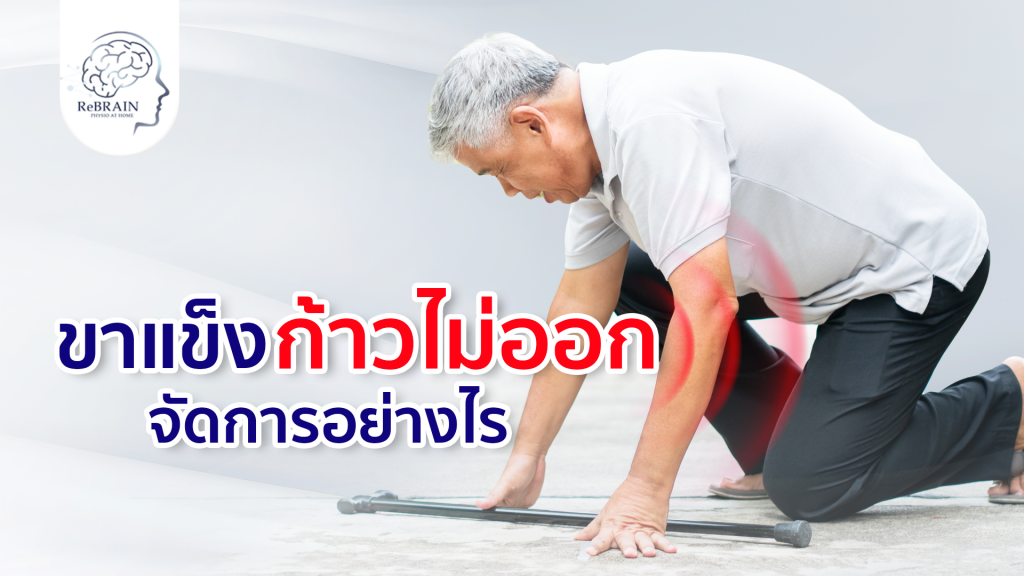
อาการ “ขาแข็ง ก้าวไม่ออก” หรือทางการแพทย์เรียกว่า Stiff Leg Gait เป็นอุปสรรคใหญ่ที่พบได้บ่อยในผู้ป่วยโรคหลอดเลือดสมอง (Stroke) ปัญหานี้ไม่เพียงแต่ทำให้เดินลำบาก แต่ยังเพิ่มความเสี่ยงต่อการล้มและทำให้ผู้ป่วยเสียความมั่นใจในการใช้ชีวิตประจำวัน

ทำไมถึงเกิดภาวะขาแข็ง ก้าวไม่ออก?
ภาวะนี้เกิดจากความผิดปกติของระบบสั่งการจากสมองที่ได้รับบาดเจ็บ ส่งผลให้กล้ามเนื้อทำงานไม่ประสานกัน โดยมีสาเหตุหลัก 2 ประการ
- กล้ามเนื้อต้นขาด้านหน้าเกร็งค้าง: กล้ามเนื้อที่ใช้เหยียดเข่า (Quadriceps) ทำงานมากเกินไปในจังหวะที่ควรจะผ่อน ทำให้เข่าเหยียดตรงตลอดเวลา
- กล้ามเนื้อที่ใช้พับเข่าอ่อนแรง: เมื่อกล้ามเนื้อฝั่งงอเข่าและงอสะโพกไม่มีแรงสู้ แรงเหยียดที่ค้างอยู่จึงทำให้ขาดู “แข็ง” เหมือนไม้กระดาน จนยกขาไม่พ้นพื้น (Swing Phase)
เจาะลึก 2 วิธีฝึกควบคุมกล้ามเนื้อ เพื่อการเดินที่มั่นคง
การจัดการกับภาวะขาแข็งไม่ได้เน้นแค่การออกแรง แต่เน้นที่ “การควบคุม (Control)” เพื่อให้สมองจดจำการทำงานที่ถูกต้อง ดังนี้

1. ฝึกผ่อนกล้ามเนื้อต้นขา (สลายแรงเหยียด)
หัวใจสำคัญคือการลดการทำงานของกล้ามเนื้อเหยียดเข่าที่เกร็งค้างอยู่
- วิธีทำ: ยืนลงน้ำหนักที่ขาข้างแข็งแรง นำขาข้างที่อ่อนแรงไว้ด้านหลังเล็กน้อย
- เทคนิค: ค่อยๆ ผ่อนเข่าข้างที่อ่อนแรงให้งอลงตามธรรมชาติ พยายามใช้แรงให้น้อยที่สุด
- คำแนะนำจากผู้เชี่ยวชาญ: ลองวางเป้าหมายไว้ด้านหน้าเข่า แล้วฝึกผ่อนเข่าให้ไปชนเป้าหมายเบาๆ เริ่มจากมุมเล็กๆ แล้วค่อยเพิ่มระยะเมื่อเริ่มคุมการ “ปล่อยวาง” ของกล้ามเนื้อได้ดีขึ้น

2. ฝึกเพิ่มความแข็งแรงและการงอ (สร้างแรงก้าว)
เมื่อผ่อนแรงเหยียดได้แล้ว ต้องสร้างแรงงอเพื่อยกขาให้พ้นพื้น
- ขั้นเริ่มต้น: นอนหงาย ฝึกงอเข่าและงอสะโพกเข้าหาตัว คุมทิศทางให้เข่าขึ้นมาตรงๆ ไม่แบะออก
- ขั้นพัฒนา: เมื่อคุมท่านอนได้ดี ให้ขยับมาฝึกในท่านั่ง และท่ายืน ตามลำดับ เพื่อเตรียมความพร้อมสู่การก้าวเดินจริง
คำเตือน: อย่าปล่อยให้ “ท่าเดินผิดปกติ” กลายเป็นความเคยชิน
ผู้ป่วยหลายท่านมักแก้ปัญหาขาแข็งด้วยการ “เดินกวาดขา” (Circumduction) โดยใช้การเอียงตัวและเหวี่ยงสะโพกออกด้านข้างเพื่อให้ก้าวพ้น
ข้อควรระวัง: แม้การเดินกวาดขาจะช่วยให้เคลื่อนที่ได้ แต่หากทำนานไปสมองจะจดจำรูปแบบที่ผิด ส่งผลให้ปวดหลัง ปวดสะโพก และเสียสมดุลในระยะยาว การรีบแก้ไขให้กลับมางอเข่าได้ตามธรรมชาติจึงเป็นสิ่งที่ควรทำเร็วที่สุด
เพื่อให้ผู้ป่วยโรคหลอดเลือดสมอง (Stroke) และครอบครัวเลือกบริการที่เหมาะกับอาการและความพร้อมของผู้ป่วยมากที่สุด ReBRAIN จึงพัฒนาระบบการดูแล 3 รูปแบบที่ตอบโจทย์ทุกระดับอาการ
- ReBRAIN at Home กายภาพบำบัดโรคหลอดเลือดสมอง รักษาที่บ้าน
- ReBRAIN Clinic คลินิกฟื้นฟูโรคหลอดเลือดสมองครบวงจร (วิภาวดี 60)
- Golden Time ศูนย์ฟื้นฟูโรคหลอดเลือดสมองครบวงจร (พักค้าง 24 ชั่วโมง)
เลือกบริการที่เหมาะกับอาการผู้ป่วยเพื่อฟื้นตัวได้เร็วที่สุด — ReBRAIN พร้อมดูแลครบทุกระดับตั้งแต่ทำกายภาพที่บ้านจนถึงฟื้นฟูแบบพักค้าง 24 ชั่วโมง




My legs are stiff, I can’t take a step….how should I manage?
Stiff legs, unable to step, are one of the causes of abnormal gait in stroke patients. which affects daily life This limits knee flexion during stride gait. making it difficult to lift the leg when walking and at times making it impossible to move the leg
Stiff gait There will be a condition in which the body cannot control its own movements. The gait is characterized by limited knee flexion during the swing phase as a result of motor cell injury. which makes it impossible to command the leg muscles to work at full efficiency This causes the front thigh muscles that are responsible for stretching the knee to contract while lifting the step. The muscles are unable to control the exertion and are overloaded causing the knee to stretch all the time. and the muscles that bend the knee are also weak cause when walking legs will straighten feel empty Difficult to lift legs But the occurrence of this condition we can manage. It must be trained to control the muscles while the legs are about to take a step. Next, it will be a method of training to control the muscles to reduce the strain on the front of the legs to allow more bending of the knees and hips to walk.
Muscle control exercises to increase knee flexion and hip flexion while walking.
– Exercises to relax the anterior thigh muscles
by standing on the weakest leg at the back and stand with weight on the strong side of the leg Relax your knees, allowing your other knee to bend down. by trying to reduce exertion as much as possible To reduce the work of the knee stretching muscle, there may be a target placed in front and relax the knee until the knee hits the target. Starting from a small angle, when getting better, increase the angle of knee relief.
– Practice to increase muscle strength, knee flexion, hip flexion
By starting the exercise from the supine position and bending the knees. Bend your hips toward you, keeping them straight up. When you start to control it, do it in the sitting and standing positions next. To help you bend your hips and knees more while stepping.
Stiff walking problems It’s a problem that makes walking look unattractive. Difficult to walk
And often walk using other muscles to help replace the work, such as the lateral trunk muscles will help when lifting the legs and pulling the hips and legs to spread out. This allows the leg to be swept to the side to make it easier to step forward. By walking like this would be walking in the wrong way. And after a long time, the brain will remember these walks. Therefore, we should hurry to fix it to have a normal form. to be able to walk steadily Safe and have a beautiful walking pattern.
De spellen in een casino komen vrijwel nooit van het casino zelf. Studio's ontwikkelen ze, casino's nemen ze af en zetten er hun eigen omgeving omheen. Wie dat weet, kijkt anders naar het aanbod op een startpagina.
Wie de spellen werkelijk maakt
Een casino kan een spel niet losser of strakker zetten; de instellingen komen van de ontwikkelaar en worden extern getest. Wie zijn favoriete studio's wil terugvinden kan Casoola en de filters op leverancier gebruiken. Vraag u bij een breed aanbod af hoeveel verschillende studio's er werkelijk vertegenwoordigd zijn.
| Rol | Bepaalt | Bepaalt niet |
|---|---|---|
| Studio | Spelregels en wiskunde | Bonusvoorwaarden |
| Casino | Selectie en acties | Uitkeringspercentage |
- Filter het aanbod op leverancier
- Kijk hoeveel studio's echt vertegenwoordigd zijn
Wie op ontwikkelaar leert kiezen, vindt sneller spellen die bij zijn tempo en smaak passen. Dat maakt de sessie prettiger, maar verandert het huisvoordeel niet. Kies een studio die u bevalt, bepaal vooraf een budget en beschouw het aanbod als vermaak.