การตรวจระบบประสาท (Neurological Examination) มีวัตถุประสงค์หลักเพื่อประเมินการทำงานของระบบประมวลผลส่วนกลาง ได้แก่ สมอง และไขสันหลัง เชื่อมโยงไปถึงเส้นประสาทส่วนปลาย (Peripheral Nerves) รวมถึงตัวรับความรู้สึกที่กล้ามเนื้อและผิวหนัง (Muscle & Skin Receptors) ว่ายังทำงานได้ตามปกติหรือไม่
โดยปกติแล้ว แพทย์หรือนักบำบัดจะเริ่มสังเกตผู้ป่วยตั้งแต่ก้าวแรกที่เดินเข้ามาในห้องตรวจ ทั้งพฤติกรรมการสบตา ท่าทางการเดิน และการประสานงานของร่างกาย ก่อนจะเข้าสู่กระบวนการตรวจเฉพาะจุด ซึ่งหนึ่งในขั้นตอนที่สำคัญที่สุดคือการตรวจการรับรู้ความรู้สึก (Sensation Test)
ขั้นตอนการตรวจการรับรู้ความรู้สึก (Sensory Modalities)
เพื่อให้ได้ผลตรวจที่แม่นยำ ผู้ตรวจจะเน้นการทดสอบที่ครอบคลุมทั้งเส้นประสาทที่รับความรู้สึกจากผิวหนังและภายในข้อต่อ ดังนี้
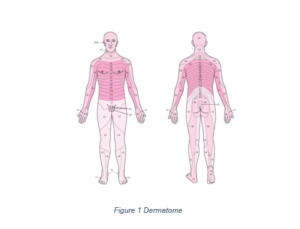
Figure 1 Dermatome
1. การทดสอบความรู้สึกเจ็บปวด (Pain Sensation หรือ Pinprick)
เป็นการทดสอบการทำงานของเส้นประสาทขนาดเล็ก (Small fibers) และ Spinothalamic tract
- อุปกรณ์: ใช้เข็มปราศจากเชื้อ (Sterile pin) หรือไม้จิ้มฟันปลายแหลม
- วิธีตรวจ: ผู้ตรวจจะสะกิดเบาๆ บริเวณใบหน้า ลำตัว และรยางค์ทั้งสองข้าง โดยเริ่มจาก “ด้านที่ปกติ” ก่อนเพื่อให้ผู้ป่วยจดจำความรู้สึก (Baseline)
- ข้อควรระวัง: ต้องหลับตาขณะทดสอบ และอุปกรณ์ต้องใช้แล้วทิ้ง (Single use) เสมอ เพื่อป้องกันการติดเชื้อทางเลือด เช่น HIV หรือไวรัสตับอักเสบ
- คำถาม: “รู้สึกแหลมหรือทู่?” และ “รู้สึกที่บริเวณไหน?”
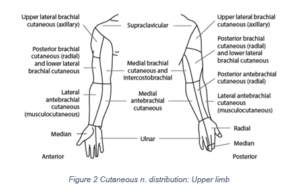
Figure 2 Cutaneous n. distribution: Upper limb
2. การทดสอบความรู้สึกสัมผัสเบา (Light Touch)
เป็นการประเมินการทำงานของเส้นประสาทขนาดใหญ่ และรยางค์ประสาทที่รับสัมผัสละเอียด
- อุปกรณ์: สำลีสะอาด (Cotton wisp)
- วิธีตรวจ: ใช้สำลีลูบเบาๆ บนผิวหนังในตำแหน่งที่สอดคล้องกับ Dermatomes ต่างๆ ผู้ป่วยต้องหลับตาตลอดการทดสอบ
- คำถาม: “รู้สึกหรือไม่?” และ “ความรู้สึกทั้งสองข้างเท่ากันหรือไม่?”
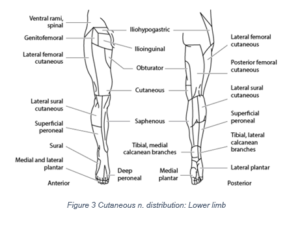
Figure 3 Cutaneous n. distribution: Lower limb
3. การทดสอบการรับรู้ตำแหน่งข้อต่อ (Proprioception Test)
เป็นการตรวจสอบความสามารถของร่างกายในการรับรู้ตำแหน่งโดยไม่ต้องใช้สายตา
- วิธีตรวจ: ผู้ตรวจจะจับบริเวณด้านข้างของนิ้วมือหรือนิ้วเท้า (เพื่อไม่ให้แรงกดจากการจับเป็นการบอกทิศทาง) แล้วขยับขึ้น-ลงอย่างรวดเร็ว ก่อนจะหยุดที่ตำแหน่งใดตำแหน่งหนึ่ง
- การทดสอบจากปลายไปหาต้น: เริ่มจากข้อต่อปลายนิ้ว หากผู้ป่วยตอบไม่ได้ จึงขยับมาตรวจข้อต่อที่ใหญ่ขึ้น เช่น ข้อมือ ข้อศอก หรือข้อเท้า
- คำถาม: “นิ้วกำลังถูกขยับขึ้นหรือลง?” หรือ “งอหรือเหยียด?”
เกณฑ์การรายงานผลและการแปลผล (Interpretation)
เพื่อให้เกิดมาตรฐานในการสื่อสารระหว่างทีมรักษา การทดสอบแต่ละตำแหน่งควรทำซ้ำ 3-5 ครั้ง และสรุปผลดังนี้
| ผลการทดสอบ | การรายงานผล | ความหมายทางคลินิก |
| ตอบถูกทั้งหมด (3/3 หรือ 5/5) | Normal | การรับรู้ความรู้สึกปกติ |
| ตอบผิดอย่างน้อย 1 ครั้ง | Impaired | การรับรู้ความรู้สึกบกพร่อง (Hypesthesia) |
| ไม่สามารถตอบได้เลย | Absent | สูญเสียการรับรู้ความรู้สึก (Anesthesia) |
Note จากผู้เชี่ยวชาญ: การตรวจ Sensation เป็นการทดสอบแบบ Subjective (ขึ้นอยู่กับคำบอกเล่าของผู้ป่วย) ดังนั้นบรรยากาศที่เงียบสงบและการให้คำแนะนำที่ชัดเจนก่อนเริ่มตรวจ จึงมีความสำคัญอย่างมากต่อความแม่นยำของผลการวินิจฉัย
เพื่อให้ผู้ป่วยโรคหลอดเลือดสมอง (Stroke) และครอบครัวเลือกบริการที่เหมาะกับอาการและความพร้อมของผู้ป่วยมากที่สุด ReBRAIN จึงพัฒนาระบบการดูแล 3 รูปแบบที่ตอบโจทย์ทุกระดับอาการ
- ReBRAIN at Home กายภาพบำบัดโรคหลอดเลือดสมอง รักษาที่บ้าน
- ReBRAIN Clinic คลินิกฟื้นฟูโรคหลอดเลือดสมองครบวงจร (วิภาวดี 60)
- Golden Time ศูนย์ฟื้นฟูโรคหลอดเลือดสมองครบวงจร (พักค้าง 24 ชั่วโมง)
เลือกบริการที่เหมาะกับอาการผู้ป่วยเพื่อฟื้นตัวได้เร็วที่สุด — ReBRAIN พร้อมดูแลครบทุกระดับตั้งแต่ทำกายภาพที่บ้านจนถึงฟื้นฟูแบบพักค้าง 24 ชั่วโมง
ต้องการปรึกษาแผนฟื้นฟูหรือประเมินค่าใช้จ่ายสำหรับผู้ป่วยสโตรก สามารถทักแชทสอบถามทีม ReBRAIN ได้ทันที!




แหล่งอ้างอิง: https://www.msdmanuals.com/professional/neurologic-disorders/neurologic-examination/how-to-assess-sensation
Sensation test
The purpose of the neurological examination is to determine whether the patient’s brain, spinal cord, peripheral nerves, and muscle and skin receptors are functioning normally. The neurological examination begins as soon as the physician identifies clinical symptoms from the patient’s history, observation of the patient’s posture and gait, behavior, eye contact, coordination during complex actions, abnormal postures or spontaneous movements. These behaviors may be apparent before the test. The neurological examination includes the following: Mental status, Cranial nerves, Motor system, Muscle strength, Gait, stance, and coordination, Sensation, Reflexes, Autonomic nervous system
Sensation test
The pain sensation test (or Pinprick) is a test that uses a “needle” or “toothpick” to poke the face, trunk, and both limbs slightly. The normal side is tested first to allow the patient to feel the true sensation. The patient will be asked “Where do you feel it? How does it feel? Is it sharp or blunt?” The patient’s eyes must be closed throughout the test. The test device will be discarded after use to avoid the spread of blood disorders (e.g. HIV infection, hepatitis). Repeat the test 3-5 times.
Proprioception test: Test by moving the tip of the finger or toe quickly and stopping at any angle. The patient will be asked to “bend or extend”, “up or down”. It is mostly tested on small joints. If the patient has closed his eyes and cannot identify the joint movement, test the larger joints first, such as the elbow, wrist, knee or ankle. Repeat the test 3-5 times.
Light touch test: Test by using a cotton swab to gently rub the face, torso and both limbs. Test the normal side first so that the patient can feel the true sensation. The patient will be asked “Where do you feel? How do you feel?” During the test, the patient must keep his eyes closed throughout the test. Repeat the test 3-5 times.
Reporting and interpretation of results
If the patient can answer all 3 or 5 times, it means normal sensation.
If the patient answers incorrectly 1 time, it means impaired sensation.
If the patient cannot answer, it means the patient has lost sensation
- ReBRAIN at Home กายภาพบำบัดโรคหลอดเลือดสมอง รักษาที่บ้าน
- ReBRAIN Clinic คลินิกฟื้นฟูโรคหลอดเลือดสมองครบวงจร (วิภาวดี 60)
- Golden Time ศูนย์ฟื้นฟูโรคหลอดเลือดสมองครบวงจร (พักค้าง 24 ชั่วโมง)
เลือกบริการที่เหมาะกับอาการผู้ป่วยเพื่อฟื้นตัวได้เร็วที่สุด — ReBRAIN พร้อมดูแลครบทุกระดับตั้งแต่ทำกายภาพที่บ้านจนถึงฟื้นฟูแบบพักค้าง 24 ชั่วโมง
ต้องการปรึกษาแผนฟื้นฟูหรือประเมินค่าใช้จ่ายสำหรับผู้ป่วยสโตรก สามารถทักแชทสอบถามทีม ReBRAIN ได้ทันที!