Barthel Index คือแบบประเมินความสามารถในการปฏิบัติกิจวัตรประจำวันพื้นฐาน (Activities of Daily Living: ADL) ที่ใช้กันอย่างแพร่หลายในผู้ป่วยโรคหลอดเลือดสมอง (Stroke) และผู้ป่วยที่มีความบกพร่องทางร่างกาย เพื่อวัดระดับความสามารถในการช่วยเหลือตนเอง และใช้วางแผนการฟื้นฟูอย่างเป็นระบบ หากคุณกำลังค้นหา “คะแนน Barthel Index แปลผลอย่างไร?”, “ผู้ป่วย Stroke ควรได้คะแนนเท่าไร?”, หรือ “Barthel Index ใช้ประเมินอะไรบ้าง?” บทความนี้สรุปครบตามหลักเวชศาสตร์ฟื้นฟูและมาตรฐานทางคลินิก
ทำไมต้องประเมิน Barthel Index ในผู้ป่วยโรคหลอดเลือดสมอง?
โรคหลอดเลือดสมองส่งผลต่อสมองและการทำงานของร่างกายในหลายมิติ ได้แก่
- ระบบกล้ามเนื้อและการเคลื่อนไหว
- การรับความรู้สึก
- การมองเห็น
- ภาษาและการสื่อสาร
- ความจำและการรับรู้
- อารมณ์และพฤติกรรม
หลังพ้นระยะวิกฤต ผู้ป่วยจำนวนมากยังมีความพิการหลงเหลือ ซึ่งกระทบต่อการใช้ชีวิตประจำวัน การประเมิน Barthel Index จึงมีบทบาทสำคัญในการ
- กำหนดแผนกายภาพบำบัด
- วางแผนฟื้นฟูรายบุคคล
- เตรียมความพร้อมก่อนกลับบ้าน
- ติดตามพัฒนาการระยะยาว
Barthel Index ประเมินอะไรบ้าง?
แบบประเมิน Barthel Index ประกอบด้วย 10 กิจกรรมหลักของชีวิตประจำวัน ได้แก่
- การรับประทานอาหาร
- การดูแลตนเอง (ล้างหน้า แปรงฟัน หวีผม)
- การลุกขึ้น–ลงเตียง
- การใช้ห้องน้ำ
- การอาบน้ำ
- การเคลื่อนที่ภายในบ้าน
- การเดินขึ้น–ลงบันได
- การแต่งกาย
- การควบคุมปัสสาวะ
- การควบคุมอุจจาระ
การให้คะแนนสะท้อนระดับความสามารถจริงของผู้ป่วยในการดำเนินชีวิตอย่างอิสระ
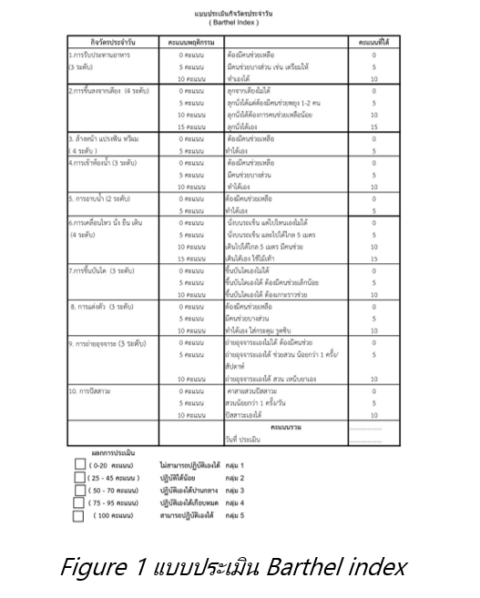
การให้คะแนน Barthel Index และการแปลผล
คะแนนรวมอยู่ระหว่าง 0–100 คะแนน
- 0–20 คะแนน → ไม่สามารถช่วยเหลือตนเองได้
- 25–45 คะแนน → ช่วยเหลือตนเองได้น้อย
- 50–70 คะแนน → ช่วยเหลือตนเองได้ปานกลาง
- 75–90 คะแนน → ช่วยเหลือตนเองได้เกือบทั้งหมด
- 100 คะแนน → ช่วยเหลือตนเองได้เต็มที่
คะแนนที่สูงขึ้นหมายถึงระดับความเป็นอิสระที่มากขึ้น
ความน่าเชื่อถือของ Barthel Index
Barthel Index ได้รับการยอมรับในระดับสากล มีการศึกษายืนยันว่า
- มีความไวต่อการเปลี่ยนแปลงของผู้ป่วย
- มีความน่าเชื่อถือระหว่างผู้ประเมินสูง (High Inter-Rater Reliability)
- แบบประเมินฉบับภาษาไทยผ่านการทดสอบความน่าเชื่อถือแล้ว
อย่างไรก็ตาม การประเมินควรทำโดยบุคลากรทางการแพทย์ เช่น แพทย์ นักกายภาพบำบัด หรือพยาบาล เพื่อความแม่นยำ
Barthel Index สำคัญต่อการวางแผนฟื้นฟูอย่างไร?
คะแนน Barthel Index ช่วยทีมสหวิชาชีพในการ
- วางเป้าหมายการทำกายภาพบำบัด
- ประเมินความพร้อมก่อนจำหน่ายกลับบ้าน
- วางแผนดูแลระยะยาว
- ลดความเสี่ยงภาวะแทรกซ้อน เช่น แผลกดทับ กล้ามเนื้อลีบ
การติดตามคะแนนอย่างต่อเนื่องช่วยให้เห็นพัฒนาการและปรับแผนการรักษาได้ตรงจุด
สรุป: Barthel Index ช่วยอะไรผู้ป่วย Stroke?
Barthel Index เป็นเครื่องมือประเมินความสามารถในการทำกิจวัตรประจำวันที่ใช้งานง่าย มีมาตรฐาน และได้รับการยอมรับในระดับสากล การประเมินที่ถูกต้องช่วยเพิ่มประสิทธิภาพการฟื้นฟู ลดโอกาสพิการระยะยาว และสนับสนุนให้ผู้ป่วยกลับมาใช้ชีวิตได้อย่างอิสระมากที่สุด หากผู้ป่วยในครอบครัวมีภาวะอ่อนแรงหรือกลืนลำบากหลัง Stroke ควรได้รับการประเมิน Barthel Index โดยผู้เชี่ยวชาญ เพื่อวางแผนฟื้นฟูที่เหมาะสมตั้งแต่ระยะต้น เพื่อให้ผู้ป่วยโรคหลอดเลือดสมอง (Stroke) และครอบครัวเลือกบริการที่เหมาะกับอาการและความพร้อมของผู้ป่วยมากที่สุด ReBRAIN จึงพัฒนาระบบการดูแล 3 รูปแบบที่ตอบโจทย์ทุกระดับอาการ
- ReBRAIN at Home กายภาพบำบัดโรคหลอดเลือดสมอง รักษาที่บ้าน
- ReBRAIN Clinic คลินิกฟื้นฟูโรคหลอดเลือดสมองครบวงจร (วิภาวดี 60)
- Golden Time ศูนย์ฟื้นฟูโรคหลอดเลือดสมองครบวงจร (พักค้าง 24 ชั่วโมง)
เลือกบริการที่เหมาะกับอาการผู้ป่วยเพื่อฟื้นตัวได้เร็วที่สุด — ReBRAIN พร้อมดูแลครบทุกระดับตั้งแต่ทำกายภาพที่บ้านจนถึงฟื้นฟูแบบพักค้าง 24 ชั่วโมง




อ้างอิง
- สาวิตรี สิงหาด และคณะ. “สมรรถภาพสมอง และความสามารถในการทำหน้าที่ของผู้สูงอายุในโรงเรียนผู้สูงอายุ”คณะพยาบาลศาสตร์ มหาวิทยาลัยอุบลราชธานี, วารสารวิชาการสาธารณสุข. 2564
- รัตนพร สายตรี และคณะ. “ความสามารถในการประกอบกิจวัตรประจำวันของผู้ป่วยโรคหลอดเลือดสมอง”. วารสา
Assessment of the ability to perform daily activities (Barthel index)
Cerebrovascular disease is mostly found in the elderly due to age-related blood vessel degeneration or risk factors from underlying diseases. However, people of all ages can have it today, which may be caused by congenital blood vessel abnormalities, accidents, etc. Stroke patients who have passed the critical stage often have disabilities that affect their bodies, minds, economies, and societies. However, such disabilities can be restored to normal and they can help themselves. Today, we will learn about the assessment of the ability to perform daily activities in stroke patients. It was found that stroke is a group of symptoms in which the brain is damaged and loses function. It is common in the elderly and tends to become more severe. It affects 6 dimensions of the body: muscle system, sensation, vision, language, memory, and emotions. Assessment of the ability to perform daily activities using the Barthel Index assessment is used to plan rehabilitation.
The Barthel index is an assessment of the ability to perform basic daily activities. There are 10 questions in total, consisting of 10 activities: eating, washing face, brushing teeth, combing hair, getting in and out of bed or sitting up from bed, using the bathroom/toilet, bathing, moving around the house, walking up and down the stairs, putting on clothes, and controlling urination. And control of defecation, etc. The Barthel index is widely used both domestically and internationally because it is easy to communicate and use between patients and service providers. In addition, the assessment can be done to obtain accurate and rapid scores. It was found that the assessment is sensitive to change and has high inter-rater reliability because it is tested between assessors (High inter-rater reliability). The Thai version of the assessment has a high level of inter-rater reliability. The assessor must assess the patient’s actual ability, which shows that they can live independently by themselves, by giving scores according to the ability level in each activity. The score is between 0-100 points, with the following criteria:
- A score of 0-20 means that you cannot perform your daily activities by yourself.
- A score of 25-45 means that you can perform your daily activities to a small extent.
- A score of 50-70 means that you can perform your daily activities to a moderate extent.
- A score of 75-79 means that you can perform almost all of your daily activities.
- A score of 100 means that you can perform your daily activities by yourself.
Therefore, we will assess the ability to perform basic daily activities (Bathel index) as a guideline for planning rehabilitation, taking care of patients according to their daily problems, providing physical therapy and preparing them before they go home, as well as monitoring their symptoms when they go home to improve their quality of life, reduce the rate of complications and recurrence, and enable patients to take care of themselves properly.
- ReBRAIN at Home กายภาพบำบัดโรคหลอดเลือดสมอง รักษาที่บ้าน
- ReBRAIN Clinic คลินิกฟื้นฟูโรคหลอดเลือดสมองครบวงจร (วิภาวดี 60)
- Golden Time ศูนย์ฟื้นฟูโรคหลอดเลือดสมองครบวงจร (พักค้าง 24 ชั่วโมง)
เลือกบริการที่เหมาะกับอาการผู้ป่วยเพื่อฟื้นตัวได้เร็วที่สุด — ReBRAIN พร้อมดูแลครบทุกระดับตั้งแต่ทำกายภาพที่บ้านจนถึงฟื้นฟูแบบพักค้าง 24 ชั่วโมง
ต้องการปรึกษาแผนฟื้นฟูหรือประเมินค่าใช้จ่ายสำหรับผู้ป่วยสโตรก สามารถทักแชทสอบถามทีม ReBRAIN ได้ทันที!